
Home Exterior Makeover: The Before-and-After Guide for 2026
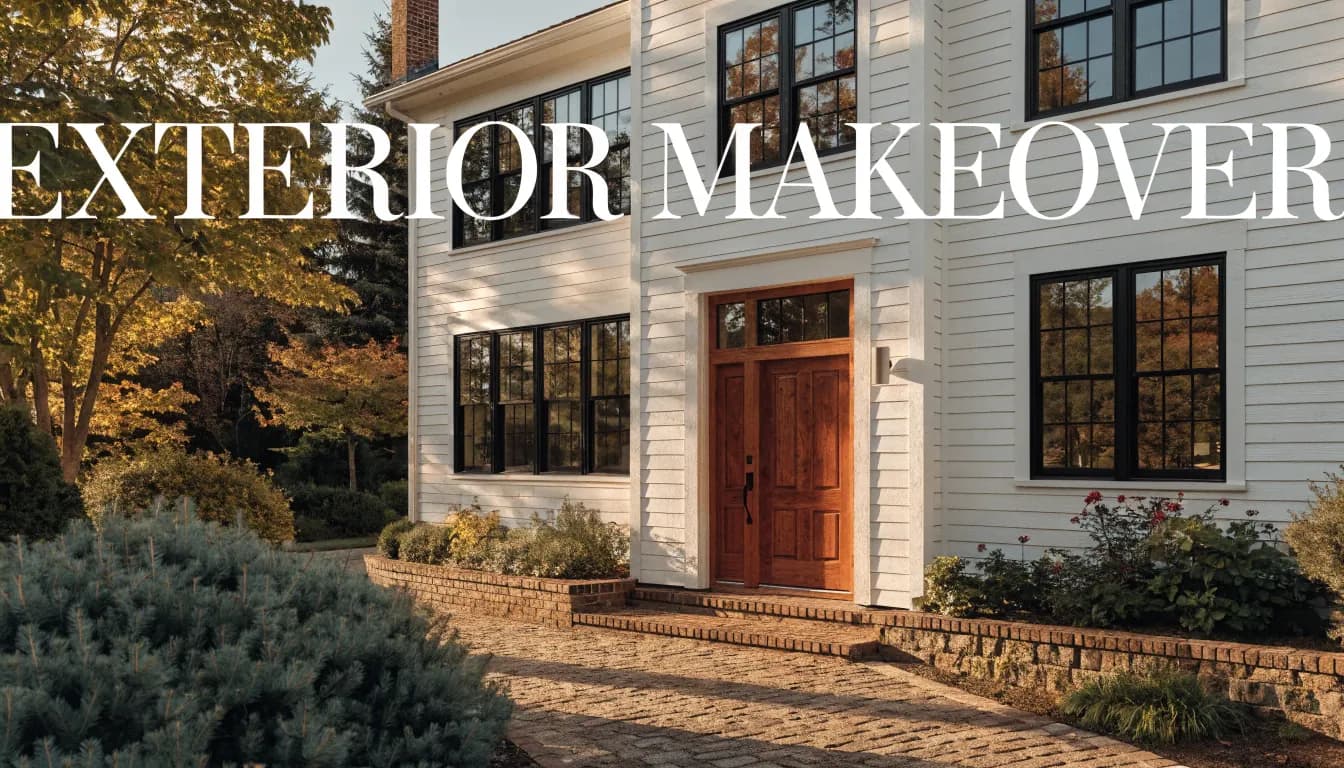
A home exterior makeover is the single highest-impact renovation most owners will ever run: a weekend of paint decisions, one new front door, and a considered front yard can shift a property's curb appeal by a full tier. The hard part is not the work; it is committing to a direction. The AI Renovation curb appeal workspace exists exactly for this stage, so you can preview siding, paint, front-door treatments, landscaping and lighting on a photo of your actual house before you spend on a single gallon of exterior paint.
What a home exterior makeover actually covers
An exterior makeover is not a remodel. It does not move walls, it does not re-pour the porch slab, and it does not add a second story. It is a coordinated refresh of six surfaces: siding (or paint on existing siding), trim, front door, roofing (or at least gutters and fascia), landscaping, and exterior lighting. Run well, those six moves read as a full transformation from the street. An exterior house remodel app lets you sequence those decisions on a single render rather than juggling swatches in the driveway.
The reason owners stall at this stage is not budget; it is combinations. Four siding colors times five trim colors times six front-door hues times four landscape styles is 480 permutations, and the eye cannot hold that many side by side. The shift in the last two years is that AI exterior design tools can render any combination on your own photo in under a minute, so you move from abstract swatch comparisons to concrete visual evidence.

Siding and exterior paint: the biggest single move
Exterior color accounts for roughly 70% of the perceived change in any before-and-after. That is why it is worth spending real planning time here before committing. A full repaint on a two-story house runs four to five figures; if you re-side, double that. Previewing the shortlist on your real facade with an exterior AI renderer is the cheapest risk mitigation available for a decision this expensive.
Three palettes dominate 2026 exterior renovations:
- Warm white plus black trim. The quiet default. Works on almost any architectural style, reads contemporary without looking trendy. Weakness: shows dirt in wet climates.
- Deep charcoal or forest green body with warm cedar accents. Strong resale story on modern homes and mid-century renovations. Weakness: fades faster in full southern sun.
- Soft clay, warm taupe, or sand with bronze metal trim. The quietest and most climate-tolerant palette. Weakness: can feel flat without strong landscaping to add life.
Choose the palette against your roof color, not in isolation. A copper-brown roof cancels a cool gray body; a charcoal roof fights a warm taupe. Upload a straight-on photo to an exterior architecture tool and render all three palettes with your exact roof in the frame. The winner is usually obvious within 60 seconds once the roof is locked in the render.
The front door: the smallest move with the biggest return
A new front door, or a repainted one, consistently delivers the highest visual-impact-per-dollar of any exterior move. Real-estate studies put the return at 60 to 90% of cost, higher than any interior upgrade. The move is cheap because the door is small; the reason it reads as a full renovation is that the front door is the focal point every visitor tracks to, so any change there registers as a change to the whole house.
Common 2026 choices: natural cedar or oak with a matte exterior oil, deep green (forest, sage, or olive), bronze or warm near-black, or a saturated accent like burgundy or dusty blue. Pick the hue to contrast the siding, not match it. Test the options side by side on your own doorway inside a home exterior design AI tool and look at them at two viewing distances: at the curb (does the house read as refreshed?) and at the threshold (does the hardware still look considered?).

Landscaping: the move that ages the best
Paint fades in seven to ten years; the landscaping you plant matures into its intended shape over roughly the same window but keeps improving. That asymmetry is why owners who skip the landscaping stage regret it fastest. A considered front-yard plan (three layers: ground cover, mid-height shrubs, one or two feature trees) does more for a home over ten years than a repaint does in its first. Plan the planting zones at the same time you plan the paint using the AI garden design tool so the two schemes are coordinated rather than stacked.
The planting pattern that survives every climate zone: clear the foundation beds to a single organizing shrub species, add one anchor tree offset from the front door, and let a low perennial border define the edge of the walkway. Avoid the default suburban mistake of spacing six different species evenly along the facade; five of one shrub reads intentional, six different ones read accidental. If you want a deeper walkthrough, the landscaping ideas guide covers planting strategy by climate zone.
Roofing, gutters, and the parts people forget
Roofing is the single biggest line item that almost no one includes in a makeover plan, because replacing a roof is a five-figure decision that usually gets deferred. That does not mean it is invisible. Three lower-cost moves handle most of the effect a full replacement would deliver: painting or replacing the fascia and soffit boards so nothing reads weathered, swapping corroded gutters for clean metal (square or half-round, matched to trim color), and pressure-washing the shingles themselves. Run those three refreshes through a home exterior makeover app before committing so you can see whether you really need a full roof swap or whether the lighter moves clear the fail states.

Exterior lighting: the night-time makeover
Every makeover photograph you have ever saved on a mood board was shot at golden hour or after dark. That is not because homes look worse in midday sun; it is because warm landscape lighting flatters every other decision you have already made. Most suburban facades are under-lit by a factor of three. Adding path lights along the walkway, two uplights on the anchor tree, and a single warm-white wall sconce beside the front door makes the house photograph like a professionally styled listing every night of the year. Previewing the evening scene inside an exterior home design app is the easiest way to land the fixture count without over-spending.

A workable sequence, weekend by weekend
Most owners try to run an exterior makeover as one large project and stall at week two. A cleaner pattern is four shorter phases, each about a weekend of on-site effort, separated by a week of curing, drying, or delivery lead time. The broader renovation disciplines in the home remodeling guide map cleanly onto this sequenced approach.
- Weekend one: decide, don't build. Photograph the house in flat daylight, load the photo into a preview tool, render six to ten full combinations, narrow to two, render each with evening lighting, pick one.
- Weekend two: paint and trim. Siding, trim, fascia, gutters. Mask, prep, roll in that order. Let it cure before touching the front door.
- Weekend three: door, hardware, house numbers. Remove the door, paint on sawhorses, swap hardware, reinstall. Replace the house numbers and the doorbell cover at the same time.
- Weekend four: landscaping and lighting. Clear the beds, plant the anchor tree and the ground-cover layer, install path and uplights, mulch. Test the lighting after dark and adjust the aim.
Frequently asked questions
How much does a typical home exterior makeover cost in 2026?
A refresh-level makeover (paint, front door, modest landscaping, basic lighting) runs roughly $8,000 to $20,000 for an average single-story home. Adding new siding, full landscape redesign, or a roof contribution pushes the range to $35,000 and up. Previewing the scope first almost always trims the final spend.
What is the highest-return move on an exterior makeover?
A repainted or replaced front door. Real-estate data from the last three years consistently shows 60 to 90% cost return, higher than any other single exterior move. It is also the cheapest to reverse if you dislike the result, which is why it is the usual starting point for first-time renovators.
Do I need an architect for an exterior makeover?
No. An architect is worth engaging only if you are changing the roofline, adding a porch, or reconfiguring the front facade structurally. For paint, door, landscape, and lighting moves, a preview tool plus a good painter and a landscaper covers the job end to end.
How do I pick paint colors that will still look good in five years?
Anchor the palette to the roof color (which you will not be changing for ten or more years), avoid trend hues as the body color, and reserve any saturated accent for the front door, where it is cheap to repaint. Render the palette on your own photo rather than judging from chips.
Can I preview an exterior makeover on my actual house?
Yes. Modern exterior preview tools accept a straight-on photo of your house and render full combinations of siding color, trim, front door, landscaping, and lighting in minutes. Use a flat daylight photo (no strong shadows) so the render engine reads surfaces accurately.
How long does a full exterior makeover take?
Four weekends of active work if you sequence the phases, plus roughly two to four weeks of lead time for paint delivery, door order, and plant availability. Running phases in parallel compresses the calendar slightly but usually costs more because trades overlap.
Should I replace the roof during a makeover?
Only if the existing roof is near end of life or clearly fighting your new palette. Most makeovers get 80% of the effect from painting the fascia and soffits, replacing gutters, and pressure-washing the shingles. A full roof replacement is a separate project with its own return calculation.
Is it worth doing the landscaping at the same time as the paint?
Yes. Landscaping and paint color influence each other strongly; a forest-green body pulls out copper-toned planting, a warm white pulls out silver and blue-green foliage. Planning the two together is the single biggest difference between a considered makeover and a stacked one.
Where to start this week
The cleanest first hour on an exterior makeover is always the same: photograph the house in flat daylight, upload the photo, and render three palettes side by side before you walk into a paint store. AI Renovation keeps that loop tight, with paint, door, landscape, and lighting previews on a single render so the whole facade moves together rather than one surface at a time. Owners who front-load the visualization consistently finish the job on time, on budget, and with a curb-appeal lift that photographs as well in person as it did on the screen.
Ready to get started? Try our Curb Appeal AI, or Home Exterior Design AI: Free AI Exterior Visualizer From Your Photo.
Frequently asked questions
How much does a typical home exterior makeover cost in 2026?
A refresh-level makeover (paint, front door, modest landscaping, basic lighting) runs roughly $8,000 to $20,000 for an average single-story home. Adding new siding, full landscape redesign, or a roof contribution pushes the range to $35,000 and up. Previewing the scope first almost always trims the final spend.
What is the highest-return move on an exterior makeover?
A repainted or replaced front door. Real-estate data from the last three years consistently shows 60 to 90% cost return, higher than any other single exterior move. It is also the cheapest to reverse if you dislike the result, which is why it is the usual starting point for first-time renovators.
Do I need an architect for an exterior makeover?
No. An architect is worth engaging only if you are changing the roofline, adding a porch, or reconfiguring the front facade structurally. For paint, door, landscape, and lighting moves, a preview tool plus a good painter and a landscaper covers the job end to end.
How do I pick paint colors that will still look good in five years?
Anchor the palette to the roof color (which you will not be changing for ten or more years), avoid trend hues as the body color, and reserve any saturated accent for the front door, where it is cheap to repaint. Render the palette on your own photo rather than judging from chips.
Can I preview an exterior makeover on my actual house?
Yes. Modern exterior preview tools accept a straight-on photo of your house and render full combinations of siding color, trim, front door, landscaping, and lighting in minutes. Use a flat daylight photo (no strong shadows) so the render engine reads surfaces accurately.
How long does a full exterior makeover take?
Four weekends of active work if you sequence the phases, plus roughly two to four weeks of lead time for paint delivery, door order, and plant availability. Running phases in parallel compresses the calendar slightly but usually costs more because trades overlap.
Should I replace the roof during a makeover?
Only if the existing roof is near end of life or clearly fighting your new palette. Most makeovers get 80% of the effect from painting the fascia and soffits, replacing gutters, and pressure-washing the shingles. A full roof replacement is a separate project with its own return calculation.
Is it worth doing the landscaping at the same time as the paint?
Yes. Landscaping and paint color influence each other strongly; a forest-green body pulls out copper-toned planting, a warm white pulls out silver and blue-green foliage. Planning the two together is the single biggest difference between a considered makeover and a stacked one.